Underwater Photography in Mallorca: Camera Housings, Dome Ports & What You Need
Mallorca is an obvious location for underwater photography. Clear Mediterranean water, rocky coves, beaches, swimming pools and long periods of sunshine make it possible to create everything from fashion and advertising images to lifestyle photography and moving image in and around the water.
Getting a professional camera underwater, however, requires considerably more preparation than simply putting it inside a waterproof case.
The housing, lens, port, water conditions and type of shot all need to work together.
At Palma Equipment Rental, we supply underwater camera solutions for professional photography and video productions in Mallorca. We’ve also tested a range of different approaches ourselves — from simple waterproof solutions through to a professional Canon R5 housing with a large dome port.
Here’s what we’ve learned.
Choosing an Underwater Camera Setup
The first question isn’t necessarily which camera you want to use.
It’s what kind of image you want to make.
A camera completely submerged several metres underwater has different requirements from a fashion photographer standing waist-deep in the sea. A camera being used from a boat is different again from one shooting split-level images at the surface of a swimming pool.
Before choosing an underwater setup, consider:
- How deep will the camera actually go?
- Will the photographer be underwater with it?
- Are you shooting stills, video or both?
- Do you need access to all the camera controls?
- What lens and field of view do you need?
- Will you be shooting completely underwater or across the waterline?
Once those questions are answered, choosing the equipment becomes much easier.
Professional Underwater Housing for the Canon EOS R5
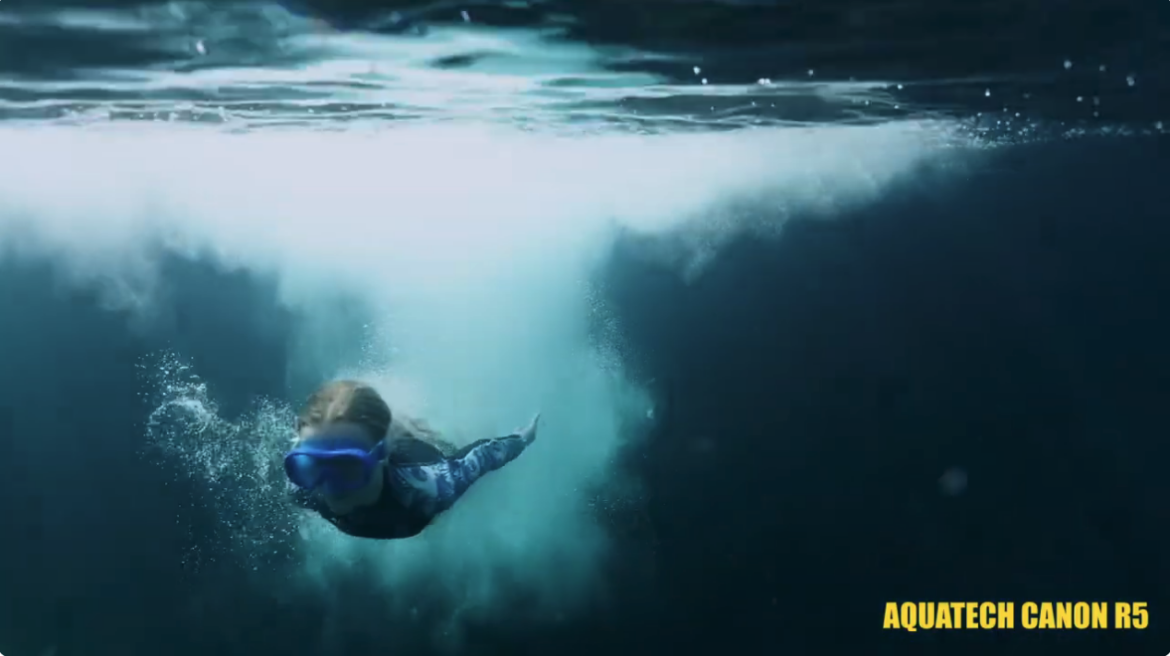
For productions requiring a professional camera system, Palma Equipment Rental offers the EDGE Pro Water Housing for the Canon EOS R5.
A dedicated housing allows a full-size professional camera to be used in the water while retaining practical access to the camera controls.
This is particularly useful for advertising, fashion and commercial photography where image quality, RAW files, autofocus performance and consistency with the rest of the shoot are important.
It also means the photographer can work with a familiar camera rather than switching to a completely different underwater system for a handful of shots.
For productions already using the Canon R5 above water, this can simplify the workflow considerably.
Why the Dome Port Matters
The transparent element in front of the lens is known as the port, and its design has a major influence on the final image.
For wide-angle underwater photography, a dome port has several advantages.
Palma Equipment Rental’s EDGE Pro setup can be supplied with the AQUATECH XLD-135 dome port, together with the required X-50 adapter, for use with the Canon RF 15–35mm lens.
The wide field of view is particularly useful underwater because photographers generally want to work relatively close to their subject.
The less water there is between the camera and subject, the less the image is affected by particles, haze and loss of contrast.
A wide-angle lens allows you to get close while still including the environment around the subject.
Shooting Half Above and Half Below the Water
One of the most distinctive uses for a dome port is the classic split-level or over-under photograph.
This is where the waterline passes through the frame so that part of the image is underwater while the rest shows the scene above the surface.
A large dome makes this considerably easier than trying to achieve the same result with a small flat port.
The larger front surface gives the photographer more control over where the waterline appears across the image and helps create the exaggerated perspective associated with this style of photography.
Mallorca is particularly well suited to these shots because the water itself can become an important part of the location rather than simply a background.
Why Wide-Angle Lenses Work So Well Underwater
For our professional R5 underwater setup, the Canon RF 15–35mm is the lens to use with the XLD-135 dome port.
There is a practical reason underwater photographers favour wide lenses.
Water reduces contrast and clarity as the distance between the lens and subject increases. Instead of standing farther away and using a longer focal length, it is normally better to get the camera physically closer to the subject.
A wide-angle lens lets you do exactly that while still showing the surrounding environment.
For fashion, lifestyle and advertising photography, this can produce a much more immersive image — particularly when the photographer is working close to the model.
Sea Versus Swimming Pool
A controlled swimming pool and the Mediterranean Sea are very different working environments.
A pool provides relatively predictable water clarity, depth and access. The photographer and talent can repeat movements, review images and make adjustments without fighting waves or currents.
The sea provides something completely different visually, but introduces more variables.
Water movement makes composition harder. Sand and particles can affect clarity. Wind can change surface conditions quickly, and entering and leaving the water with professional camera equipment requires more care.
The position of the sun also becomes extremely important.
When possible, it is worth considering the underwater shots when scheduling the production rather than simply trying to fit them into whatever time remains at the end of the day.
Light Changes Underwater
Water changes light very quickly.
Even close to the surface, colour, contrast and brightness behave differently from shooting on land. The deeper the camera and subject go, the more pronounced this becomes.
For shallow fashion and lifestyle photography, natural sunlight can produce beautiful results — particularly when the surface of the water creates moving patterns of light.
Shooting close to the surface also allows the photographer to use the brightness and colour of Mallorca’s natural daylight.
For more controlled results, additional lighting may be required, but introducing artificial light underwater adds another layer of equipment and planning.
Sometimes the simplest solution is to design the shot around the available natural light rather than trying to recreate a conventional studio setup underwater.
Protecting the Equipment Starts Before Entering the Water
Professional underwater photography requires patience.
Before the camera goes anywhere near the water, the housing needs to be correctly assembled and checked.
Seals and contact surfaces should be clean, the correct port and adapter must be fitted, and nothing should interfere with the sealing surfaces.
It is also worth setting up as much of the camera as possible before closing the housing.
Opening a housing unnecessarily on a beach introduces opportunities for sand, dust, water or other contamination to reach the sealing surfaces.
When working around salt water, careful handling after the shoot is just as important.
Salt water should never simply be allowed to dry onto professional underwater equipment.
Don’t Forget What Happens Above the Water
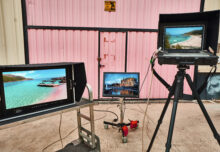
An underwater shoot still requires plenty of conventional production equipment.
The photographer may need a monitor or laptop for reviewing images, batteries need somewhere dry and organised, and the camera needs a safe place to be assembled and checked.
Shade can be particularly useful.
Trying to inspect a camera housing, change equipment or evaluate images in direct Mallorcan sunlight is unnecessarily difficult.
Towels, waterproof boxes, equipment carts and a clean working area can become just as important as the camera itself.
We Tested Different Underwater Camera Solutions
Not every underwater shot requires a professional camera housing.
That’s why we tested five different solutions for getting cameras underwater, from simpler options through to a professional camera and dome-port setup.
The test gives a useful idea of the differences between the systems and, more importantly, what each solution is actually like to use in the water.
For some productions, a simple solution may be completely adequate.
For others, particularly professional fashion, advertising and commercial photography, the control and image quality of a dedicated housing and full-size camera make the additional preparation worthwhile.
You can watch our underwater camera test on the Palma Equipment Rental YouTube channel.
Renting an Underwater Camera in Mallorca
The most important thing with underwater equipment is to plan the setup before the shoot.
Tell us what you are trying to photograph, whether you’re shooting in the sea or a swimming pool, approximately how deep the camera needs to go and whether you want completely submerged or split-level images.
From there, we can establish which solution is appropriate.
Palma Equipment Rental supplies professional underwater camera equipment from our rental facility in Palma de Mallorca, including the EDGE Pro Water Housing for Canon EOS R5 and AQUATECH XLD-135 dome port setup with Canon RF 15–35mm lens.
Equipment is available for professional productions throughout Mallorca, with rentals for Ibiza, Menorca and Formentera also possible. Mainland Spain can be arranged on request.
Mallorca gives photographers incredible opportunities to shoot around water.
The important part is making sure the camera is as ready to go in as you are.